


Despite these benefits, AI is not able to offer human advisor services such as the ability to consider complex personal circumstances or unexpected changes in a client’s situation.
A financial advisor offers a holistic approach considering aspects such as financial planning, tax management or retirement preparation.
This coupled with the fact that an experienced advisor can apply their knowledge and judgment to situations that do not fit predefined models, offering customized strategies to adjust their advice based on unforeseen events. Now then, what is the artificial intelligence revolution in financial advice? In my opinion, this revolution lies in the combination between AI and human advisors, achieving an optimal balance that brings together the strengths of both. AI takes care of day-to-day management, while human advisors focus on strategic planning and complex decision making.
I see the benefits of this collaboration translating into three advantages:
- Data Analytics and Predictions: AI analyzes large volumes of data and makes predictions about the market, helping advisors make informed decisions. Human interpretation is essential to apply this data to the client’s specific context and adjust investment strategies as needed.
- 3Customization of Investment Strategies: AI algorithms create detailed profiles that enable the development of personalized and dynamic investment strategies. These strategies automatically adjust based on changes in the market or client situation. Advisors review and adjust these strategies, considering client conversations and personal circumstances.
- Automation of Repetitive Tasks: AI automates repetitive and administrative tasks, such as data collection, reporting and account monitoring. This frees up time for advisors to focus on strategic advice and client relationships, providing more personalized and proactive service.
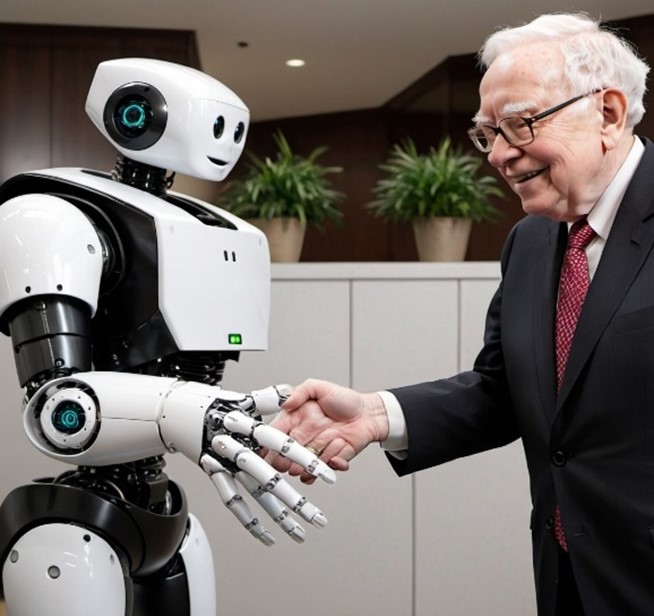 The collaboration between AI and human advisors creates a more effective and efficient advisory environment, improving both the accessibility and quality of financial service.
As a conclusion, I would say that artificial intelligence is transforming financial advice, managing huge sums of money and making an industry much more accessible and efficient. Its data analytics, automation and personalization capabilities are revolutionizing the industry, although it is crucial to have the judgment and assessment of a human advisor. The combination of AI and human advisors can offer superior service, marrying the efficiency and accuracy of AI with the judgment and empathy of humans. This is in my opinion, the real revolution we are witnessing and will experience in the coming years lies in the collaboration between the two.

